

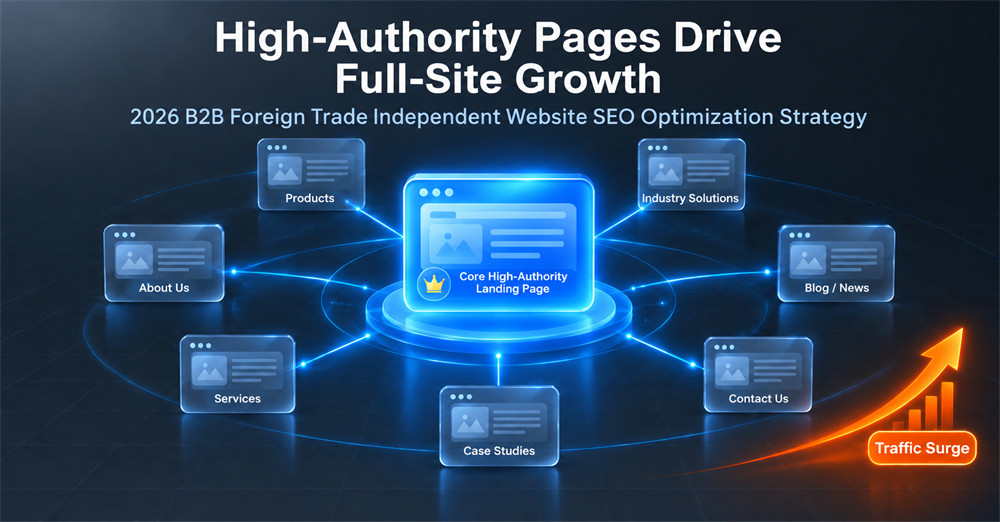
This article redefines high-authority websites and their key characteristics, highlighting the strategic value of building a high-quality pool of original English content for standalone websites in 2026. It explores 2026 SEO optimization techniques based on topic clusters and Google SEO link-building strategies. By combining pillar page authority, internal link equity distribution, and targeted backlinks, businesses can use established pages to strengthen newer content and high-authority pages to support less authoritative ones. This systematic approach addresses the fundamental challenge of how to improve Google rankings and drive substantial traffic growth across an entire website.
In practice, many B2B export businesses operating standalone websites fall into a persistent misconception about traffic growth: the older the domain and the higher the site's overall authority, the easier it is to attract more traffic. Many website operators continue to spread their resources across the entire site, yet struggle to overcome persistent traffic plateaus. In reality, Google's search algorithms in 2026 place increasing emphasis on topical authority. A small number of high-authority core pages can deliver far greater growth potential than simply accumulating domain age or implementing scattered optimization tactics. Systematically building authoritative core pages and distributing their value throughout the site is a key strategy for helping export-oriented businesses break through traffic ceilings.
1. Rethinking Website Authority: Definition and Characteristics of High-Authority Websites
**Key takeaway:** By 2026, Google's algorithmic evaluation has shifted from broad assessments of domain authority toward more in-depth evaluations of topical authority. The ranking advantage associated with domain age alone continues to diminish, while a high-quality collection of topic-focused content has become a defining characteristic of authoritative websites.
Many industry professionals still assess website authority using traditional criteria such as domain age and backlink volume, assuming that websites with a longer operating history naturally enjoy greater authority. However, this understanding is increasingly outdated in light of Google's current evaluation framework. The definition and characteristics of high-authority websites have evolved from broad, domain-level assessments to more comprehensive evaluations of expertise and authority within specific topics.
Under traditional SEO practices, domain registration age and accumulated backlinks were major evaluation factors. Even older domains with relatively average content could enjoy an initial ranking advantage. However, as Google's E-E-A-T framework has continued to evolve, its search systems have increasingly emphasized websites that demonstrate in-depth topical coverage, positive user engagement signals, and authoritative citations from within their industries. Domain age alone, without substantial supporting content, is becoming a less reliable source of ranking advantage.
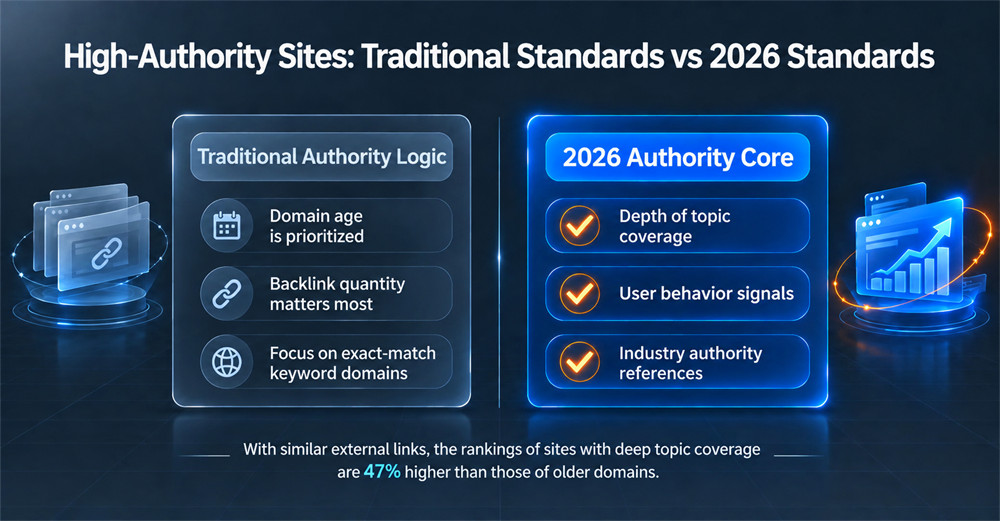
In 2026, genuinely high-authority websites share three defining characteristics:
**1. In-depth topical content:** A high-quality collection of original English content for the standalone website, providing comprehensive coverage of core business topics with information density and subject-matter expertise well above industry averages.
2. Positive user engagement: Strong user signals, including click-through rates, time on page, repeat visits, and conversion rates, indicate that the content aligns well with user needs.
3. Industry recognition and authority: Relevant industry media outlets, upstream and downstream business partners, and professional organizations proactively cite the website and recommend its content through backlinks, helping build topical authority over time.
Data from Page One Xiamen's service projects indicate that, with comparable backlink investment, websites with in-depth topical content outperform sites relying primarily on domain age by 47% in core keyword rankings. The more focused and comprehensive the topical content, the faster authority can accumulate and the more stable rankings tend to become. In short, domain age is a supplementary advantage, not the deciding factor. A high-quality original content system is the foundation of a high-authority website.
2. SEO Optimization Techniques for 2026: Using Topic Clusters to Distribute Authority from High-Performing Pages to Supporting Content
**Key takeaway:** Building a Topic Cluster content architecture is one of the core SEO optimization strategies for 2026. A structured internal linking system helps distribute link equity from central pillar pages to long-tail pages, enabling established, authoritative content to support newer pages and stronger pages to lift the performance of related content.

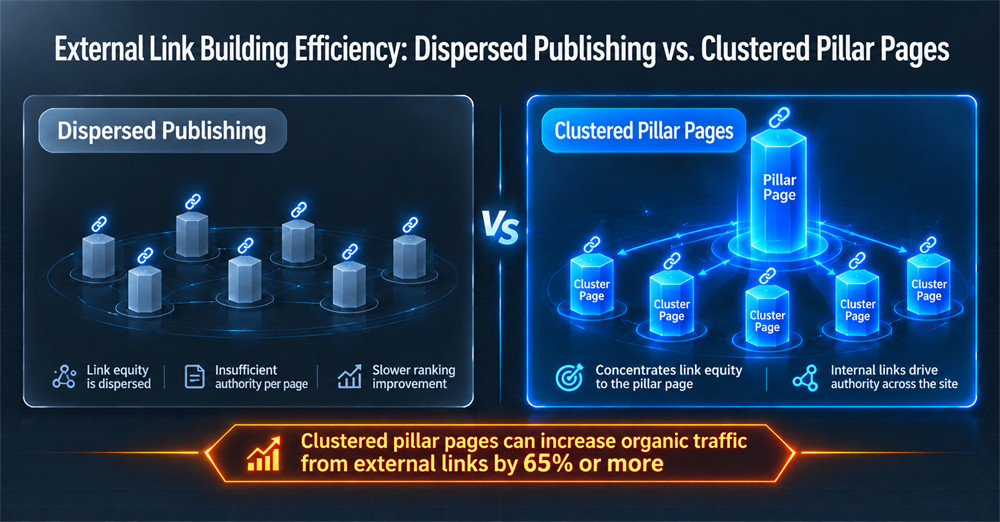
To use high-authority pages to drive traffic growth across an entire website, the key is to build a topic cluster architecture that distributes the value of authoritative pages through a structured internal linking network rather than confining it to individual URLs. This is also a mainstream implementation approach for on-page SEO in 2026.
A topic cluster centers on a core business topic. First, create an authoritative pillar page, then expand it with dozens of supporting pages targeting specific long-tail topics. All cluster pages link to the pillar page, while closely related supporting pages also link to one another, creating a comprehensive topical content network. This structure helps Google understand the site's depth of expertise within a particular subject and can strengthen the visibility of relevant pages. The authority accumulated by the pillar page can also flow through internal links to supporting pages, helping improve rankings across related sections of the website.
Implementation involves three key steps:
1. Choose a pillar topic and build an authoritative core page. Prioritize broad industry keywords that are closely aligned with core business offerings, have a reasonable search volume, and offer commercial potential. Develop a comprehensive pillar page covering essential concepts, frequently asked questions, use cases, and product or solution selection guidance. Ensure that its depth, relevance, and information value exceed those of competing pages, establishing it as a leading resource on the topic.
2. Expand long-tail content and build a cluster matrix. Break down the pillar topic into relevant long-tail keywords, user questions, and use-case requirements. Create supporting blog posts, FAQs, case studies, technical explanations, and other cluster pages. Each page should address a specific user need with precise, original content.
3. Build an internal linking network to distribute authority systematically. Link every cluster page to the pillar page, add contextual internal links between closely related supporting pages, and link from the pillar page to relevant cluster content. This creates a cohesive internal linking structure that helps search engines discover and understand relationships between pages while facilitating the distribution of link equity.
The main advantage of this approach is that it maximizes the value of existing high-authority pages. Websites that already have established pages with some ranking authority can upgrade those pages into pillar pages and expand their supporting clusters. The existing authority of these pages can help new content gain visibility and rankings more efficiently, shortening the time needed to establish organic search performance. According to implementation data from Page One Xiamen, websites using topic cluster optimization reduced the average time required for new content to be indexed by 40%, while long-tail keyword rankings improved 2.1 times faster than under a scattered optimization approach. This demonstrates the potential of using established pages to accelerate the growth of newer content.
3. Amplifying Page Authority: Google SEO Link-Building Strategies for Strengthening Core Pages
**Key takeaway:** Concentrating backlink resources on core pillar pages and then distributing their value through topic cluster internal links is one of the most resource-efficient Google SEO link-building strategies. It allows businesses to make a focused backlink investment that can benefit multiple related pages across the website.

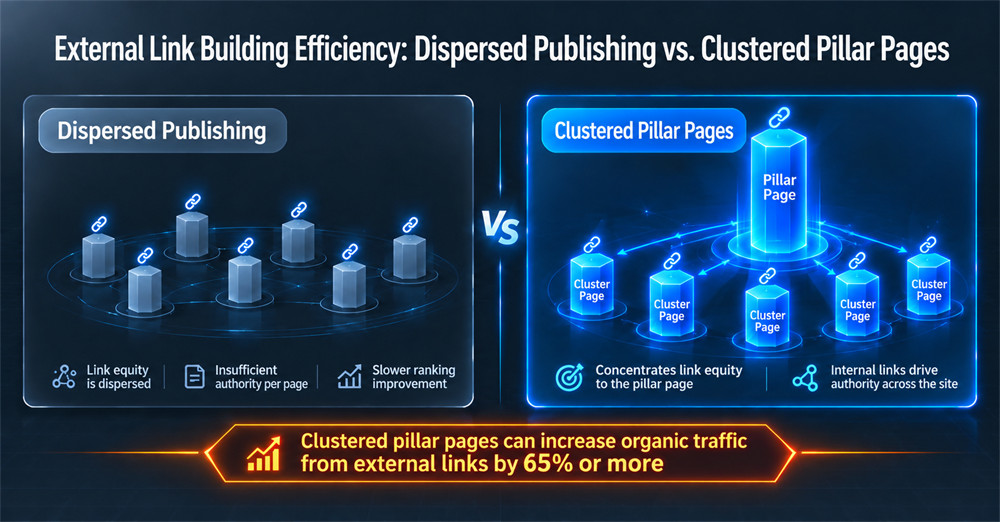
Topic clusters establish the internal linking pathways needed to distribute authority, while backlinks help strengthen pillar pages and amplify their potential to drive traffic across the entire website. Backlinks remain an important signal in Google's ranking systems, but spreading link-building resources thinly across every page can be inefficient. A more focused approach is to strengthen core pillar pages first, then distribute their value through internal links. This is an effective optimization strategy for 2026.
Many businesses take an evenly distributed approach to link building, acquiring a small number of backlinks for every product page and article. As a result, each page receives limited authority and ranking improvements remain modest. A more strategic approach is to concentrate approximately 80% of backlink resources on the 20% of pages that serve as the site's core pillars. This helps strengthen their topical relevance and authority. As these pillar pages become more authoritative, their internal links can help distribute link equity to related cluster pages, supporting broader ranking improvements and allowing one focused investment to benefit multiple pages.
There are three key white-hat link-building strategies that work well with topic clusters:
1. Linkable content assets. Develop industry research reports, data-driven white papers, product selection guides, and other resources around pillar pages. These assets can attract citations and backlinks from industry media, business partners, and specialist blogs. Because these links can offer strong topical relevance and editorial value, they can help strengthen the authority of pillar pages.
2. Industry partnerships and guest contributions. Publish in-depth original content on reputable industry platforms and niche publications. Include relevant links to pillar pages naturally within the content to reinforce topical relevance and provide readers with useful resources.
3. Digital PR and brand mentions. Share industry insights and real-world business case studies to earn media coverage and editorial citations, helping strengthen brand credibility and the website's authority signals.
In practice, concentrating link-building efforts on pillar pages can improve resource efficiency by more than 65% compared with a dispersed approach. A single high-quality backlink from a relevant industry website to a pillar page may help improve rankings for numerous related cluster pages, potentially delivering greater value than building links to individual pages in isolation. This is a key principle for strengthening website-wide authority efficiently in 2026.
4. Real-World Results: How High-Authority Pages Drive Website-Wide Traffic Growth
Case background: A B2B export website for advanced materials based in Guangdong, China, had been operating for two years. Although its domain age offered some advantages, its content was fragmented and lacked a coherent topic cluster structure, leaving organic traffic stagnant for an extended period.

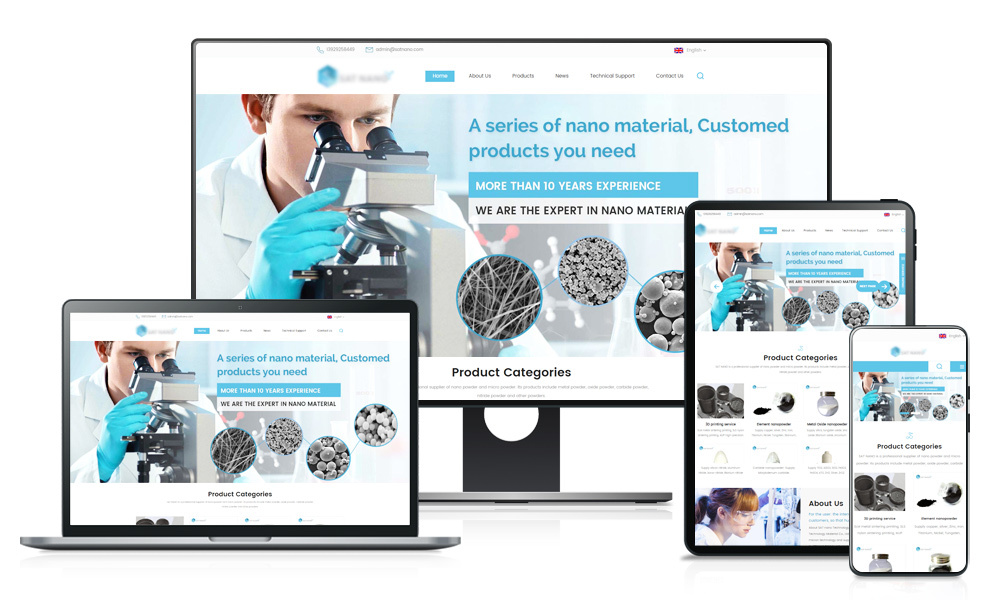
Situation Before Optimization
· Monthly organic traffic across the website remained at approximately 3,200 visits. Core product keywords generally ranked between positions 10 and 20, with little progress toward the first page of Google search results.
· Backlink resources were spread across individual product pages. Investment continued to increase, but ranking improvements remained limited.
· Content was published in a fragmented manner without a coherent topic cluster structure, preventing authority from accumulating and being distributed effectively.
Optimization Strategy
The company partnered with Page One Xiamen to implement an integrated strategy combining high-authority pillar pages, topic clusters, and targeted link building:
1. Selected three core business topics and upgraded existing pages with established ranking potential into pillar pages. Additional in-depth content was developed to create three authoritative core pages.
2. Identified 20–30 long-tail search terms for each pillar topic and created corresponding original English content for the standalone website. A comprehensive internal linking network was established to connect the cluster pages and distribute authority systematically.
3. Applied Google SEO link-building strategies to concentrate backlink resources on the three pillar pages. Industry guest contributions and editorial citations of valuable content assets helped strengthen the authority of these core pages.
Results After Optimization
After six months of optimization:
· The core keywords targeted by all three pillar pages reached the top five positions in Google search results, while 76 long-tail keywords entered the top 20.
· Monthly organic traffic across the website increased by 118%, while qualified inquiries grew by 82%.
· The company achieved substantial website-wide traffic growth without increasing its overall content production volume, relying instead on structural improvements and a more focused allocation of resources.
Improving Google rankings has never been a matter of relying on scattered optimization tactics or passively accumulating domain age. It requires a systematic approach to building and distributing authority. In 2026, competition among export-oriented standalone websites has moved beyond the broad strategies of competing on domain age and backlink volume toward a more sophisticated focus on topical authority and content depth.
By understanding what defines a high-authority website, building internal linking pathways through topic clusters, and strengthening core pages with targeted link-building efforts, businesses can use a relatively small number of authoritative pages to drive traffic growth across the entire site. This approach creates opportunities for more efficient ranking improvements, lower acquisition costs, and sustainable organic growth.
As a Google Premier Partner for 11 consecutive years, Page One Xiamen brings 20 years of experience in digital marketing for export-oriented businesses and has served more than 10,000 companies. Our SEO services are aligned with the search landscape and optimization priorities of 2026. Through topic cluster content strategies and targeted link building, we help businesses develop authoritative core pages and establish sustainable pathways to website-wide organic traffic growth, supporting consistent international customer acquisition. Contact us by phone or WeChat at 18855144825.